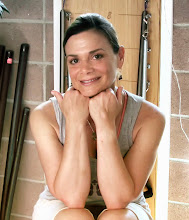
I see consumerwatchdog.com post hugh billboards about evil Mercury Insurance company and how they want to screw the consumer. I hear evil things about how Wellpoint (Blue Cross is under Wellpoint) and how they are coercing their employees to rally against health reform.
I'm totally screwed.
My (really our..my husband & me) are insured by Mercury for Auto & Home and Blue Cross for Medical.
I'm feeling totally screwed and even though I pay those premiums every month, in full on time, I feel when it comes time to eventually use the insurance they will not be there to deliver. I am feeling raped of my hard earned money which I am willingly giving to these crooks, yet lucky I am insured. What is wrong with this picture? I would love to say "Screw You" and stop it all but we are so conditioned as a society that we MUST BE INSURED or we will lose everything if something happens .... Well....we are insured (but are we really?) and I still feel like we could lose everything while we are paying enormous amounts of money every year for what? Protection? Why don't I feel like I am being protected?
I actually looked into changing to another insurance company (scouted around for quotes from others)- BUT guess what? Our premiums would DOUBLE!!! YES DOUBLE!!! You see my husband has been with Mercury since the dawn of time and because we (he really...I just came along with marriage)has been such a long time "loyal" customer we get a fantastic discount (this is to keep us since they make money off us because we have not filed a claim in a decade or more). Essentially we are customers THEY want so we get the carrot dangled and we stay and Pray they will have mercy if we will ever need them in the future. How sick is this????
And speaking of SICK.....We better not get sick or we are really screwed - we have Anthem (Blue Cross) of CA and they are apparently no better. UGH......
Of course I am not planning on getting sick, in fact the chances are very low being that I do a lot of self care in the form of prevention and Eastern type medicine (acupuncture, chiropractic, massage, NET, NRT and on...I have a village). Obviously exercise is a staple in our household being that is our business and along with that we eat very healthy. Organic is the norm for us in all ways not just food. We buy local as much as we can and support the community in various ways through contributions of both time and money. Practicing health goes beyond just nutrition it's a way of life. It's a part of all our relationships (family, friends, neighbors and community), needless to say we lead a life where we think about health everyday...actually we really don't have to think about it...it's our normal. So I suppose in this way, I feel the most protected. Taking accountability and responsibility for my life is my protection in my own way. I am certainly not leaving it up to any insurance company that is for sure.
I can only hope if it ever comes to pass that the unforeseen occurs in the form of an accident, injury or an illness (that could not be prevented) my insurance would some how come through. Although, I am not holding my breath or taking a backseat, I stay proactive, aware and I am going to pay attention and be mindful and present each moment.
Showing posts with label health reform. Show all posts
Showing posts with label health reform. Show all posts
Saturday, September 5, 2009


Thursday, September 3, 2009
The Healing of America
The Healing of America
A Global Quest for Better, Cheaper, and Fairer Health Care
By T.R. Reid
(Penguin Press; 277 pages; $25.95)
Whether journalist T.R. Reid's new book, "The Healing of America," will influence the high-stakes health care debate this fall remains to be seen, but he makes a compelling case that an efficient, effective universal health care system is not pie in the sky.
He reports that every industrialized democracy, except the United States, has figured out how to provide insurance and basic health care to virtually all of its citizens, and argues that the United States should borrow and adapt successful ideas from other countries. In practice, none of these health care systems is problem-free, Reid makes clear, and nearly everywhere escalating costs are a major challenge. But every industrialized democracy spends a far smaller percentage of its wealth on health care than does the United States and gets better results according to standard measures such as life expectancy after birth (the United States ranks 47th) and infant mortality (22nd).
In the United States, more than 40 million are uninsured, a harsh, anti-democratic reality that appalls Reid. In a hypothetical example, he compares two American mothers who are single parents - a well-compensated executive with employer-provided health insurance and a hardworking domestic who has no health insurance but makes too much to qualify for Medicaid. When both women begin to experience symptoms of illness, the woman with health insurance goes to the doctor, and tests reveal early-stage ovarian cancer. She is treated successfully and lives to enjoy her grandchildren. The other woman, fearful she cannot afford out-of-pocket costs for a doctor and tests, delays going for treatment until the symptoms are unbearable. She does not survive her ovarian cancer, and her daughter becomes an orphan. Compared with other democratic countries, only in America are such inequities commonplace.
For this book, which is a lucidly written medical travelogue, Reid visited a dozen countries. At each stop, we get an opening glimpse of the country's medical system and priorities when Reid seeks treatment for his chronically stiff and sore right shoulder. Treatment options ranged from an expensive and possibly ineffective shoulder-joint replacement in the United States, to the Tibetan-trained doctor in Nepal who told Reid: "[I] wouldn't begin a diagnosis of your shoulder until I had tasted your urine. It tells me so much about a patient's health status."
Among the industrialized democracies, there are various concepts for extending medical insurance to all citizens, Reid informs us. Some countries have incorporated elements of the 19th century German model where employers provide insurance to workers and the nonprofit insurance plans pay private medical care providers. In Canada, the single-payer national system is reminiscent of our Medicare program in which the government pays private providers. Here in the United States, veterans who receive medical care at Veterans Affairs hospitals are in a system similar to Britain's National Health Service, in which the government owns the hospitals and pays for it all through taxation.
Regardless of the different concepts, there are two major reasons, Reid maintains, for the comparatively much higher cost of health care in this country. One is that we have a complex, fragmented system. The other, Reid stresses, is that "the United States is the only developed country that relies on profit-making health insurance companies to pay for essential and elective care."
If Reid had a magic wand, he would get rid of profit-making health insurance companies. If we followed the example of other democracies, as Reid's medical travelogue shows, the federal government would cut the fees and payments to other players in the health care system to extend health insurance coverage to all Americans.
When it comes to the next round of debate this fall in Washington on the future of our health care system, Reid believes in this important book that the Golden Rule can trump the cynical adage, "He who has the gold rules." Maybe, but only if President Obama, who promised major health care reform, is willing to take on the health insurance and drug companies - and, most important, to arouse millions of Americans to demand reform
A Global Quest for Better, Cheaper, and Fairer Health Care
By T.R. Reid
(Penguin Press; 277 pages; $25.95)
Whether journalist T.R. Reid's new book, "The Healing of America," will influence the high-stakes health care debate this fall remains to be seen, but he makes a compelling case that an efficient, effective universal health care system is not pie in the sky.
He reports that every industrialized democracy, except the United States, has figured out how to provide insurance and basic health care to virtually all of its citizens, and argues that the United States should borrow and adapt successful ideas from other countries. In practice, none of these health care systems is problem-free, Reid makes clear, and nearly everywhere escalating costs are a major challenge. But every industrialized democracy spends a far smaller percentage of its wealth on health care than does the United States and gets better results according to standard measures such as life expectancy after birth (the United States ranks 47th) and infant mortality (22nd).
In the United States, more than 40 million are uninsured, a harsh, anti-democratic reality that appalls Reid. In a hypothetical example, he compares two American mothers who are single parents - a well-compensated executive with employer-provided health insurance and a hardworking domestic who has no health insurance but makes too much to qualify for Medicaid. When both women begin to experience symptoms of illness, the woman with health insurance goes to the doctor, and tests reveal early-stage ovarian cancer. She is treated successfully and lives to enjoy her grandchildren. The other woman, fearful she cannot afford out-of-pocket costs for a doctor and tests, delays going for treatment until the symptoms are unbearable. She does not survive her ovarian cancer, and her daughter becomes an orphan. Compared with other democratic countries, only in America are such inequities commonplace.
For this book, which is a lucidly written medical travelogue, Reid visited a dozen countries. At each stop, we get an opening glimpse of the country's medical system and priorities when Reid seeks treatment for his chronically stiff and sore right shoulder. Treatment options ranged from an expensive and possibly ineffective shoulder-joint replacement in the United States, to the Tibetan-trained doctor in Nepal who told Reid: "[I] wouldn't begin a diagnosis of your shoulder until I had tasted your urine. It tells me so much about a patient's health status."
Among the industrialized democracies, there are various concepts for extending medical insurance to all citizens, Reid informs us. Some countries have incorporated elements of the 19th century German model where employers provide insurance to workers and the nonprofit insurance plans pay private medical care providers. In Canada, the single-payer national system is reminiscent of our Medicare program in which the government pays private providers. Here in the United States, veterans who receive medical care at Veterans Affairs hospitals are in a system similar to Britain's National Health Service, in which the government owns the hospitals and pays for it all through taxation.
Regardless of the different concepts, there are two major reasons, Reid maintains, for the comparatively much higher cost of health care in this country. One is that we have a complex, fragmented system. The other, Reid stresses, is that "the United States is the only developed country that relies on profit-making health insurance companies to pay for essential and elective care."
If Reid had a magic wand, he would get rid of profit-making health insurance companies. If we followed the example of other democracies, as Reid's medical travelogue shows, the federal government would cut the fees and payments to other players in the health care system to extend health insurance coverage to all Americans.
When it comes to the next round of debate this fall in Washington on the future of our health care system, Reid believes in this important book that the Golden Rule can trump the cynical adage, "He who has the gold rules." Maybe, but only if President Obama, who promised major health care reform, is willing to take on the health insurance and drug companies - and, most important, to arouse millions of Americans to demand reform
Subscribe to:
Posts (Atom)